


Bringing family members to the United States can feel like a huge task, especially with all the rules and paperwork. This guide is here to help make the process of visa familiar reunificacion a bit clearer. We’ll walk through what you need to know, from who can sponsor to how to actually get the application done. It’s a big step, but with the right information, you can bring your loved ones closer.
Key Takeaways
- Sponsoring family members for U.S. immigration requires you to be a U.S. citizen or green card holder, at least 18 years old, and able to prove your relationship and financial support capability.
- The process starts with filing Form I-130, Petition for Alien Relative, with USCIS. This form establishes the family relationship.
- Immediate relatives of U.S. citizens (spouses, unmarried children under 21, and parents if the citizen is 21+) have a faster process as visas are always available.
- Other family members fall into preference categories with annual limits, meaning wait times can be long, determined by a priority date shown in the Visa Bulletin.
- Special programs like Family Reunification Parole (FRP) exist for certain nationalities, allowing eligible individuals to come to the U.S. while waiting for their immigrant visa, but these are by invitation only.
Understanding Visa Familiar Reunificacion Eligibility
So, you’re thinking about bringing family members to the U.S. through the family reunification process. That’s great! But before you get too far ahead, we need to talk about who actually qualifies to sponsor someone and who can be sponsored. It’s not as simple as just wanting someone here; there are specific rules.
Who Can Sponsor Family Members?
To be a sponsor, you generally need to be a U.S. citizen or a lawful permanent resident (that’s someone with a Green Card). You also have to be at least 18 years old. It’s not just about your status, though. You also need to show that you can financially support the family member you’re sponsoring. This means proving you have enough income or assets so they won’t become a public charge.
Eligibility Requirements for Sponsored Relatives
The person you want to bring over also has to meet certain criteria. The U.S. immigration system categorizes family members into different groups, and some get processed faster than others. Generally, you can sponsor:
- Spouses
- Children (both married and unmarried, though the rules can differ)
- Parents (if you are a U.S. citizen and at least 21 years old)
- Siblings (if you are a U.S. citizen and at least 21 years old)
It’s important to remember that the relationship must be legally recognized. You’ll need official documents to prove you’re related.
Key Documentation for Sponsors and Relatives
Gathering the right paperwork is a big part of this. For sponsors, you’ll likely need proof of your U.S. citizenship or permanent residency, like a birth certificate, passport, or Green Card. You’ll also need to show your financial ability, often with tax returns or employment verification letters. For the sponsored relative, you’ll need documents that prove your relationship, such as:
- Birth certificates
- Marriage certificates
- Adoption decrees (if applicable)
The most important thing is to have official documents that clearly link the sponsor and the beneficiary. Any missing or incorrect documents can cause delays or even lead to a denial, so double-checking everything is super important.
It’s easy to get lost in all the forms and requirements. Think of it like building something – you need the right materials and a solid plan before you start. Making sure you meet all the basic eligibility rules upfront saves a lot of headaches down the road.
Navigating The Application Process
So, you’ve decided to bring a loved one to the U.S. That’s great! But now comes the part where you actually have to do the paperwork. It can feel like a lot, but breaking it down makes it more manageable. Let’s walk through the main steps.
Filing Form I-130: The Initial Step
This is where it all begins. You’ll need to file Form I-130, officially called the Petition for Alien Relative, with U.S. Citizenship and Immigration Services (USCIS). Think of this form as your official way of telling the government, "Hey, this person is my family, and I want them to come here." It’s the foundation for the whole reunification process. Once USCIS reviews and approves this petition, it gets sent over to the National Visa Center (NVC) to keep things moving.
Gathering Supporting Evidence
After the I-130 is filed, you’ll need to collect documents that prove your relationship and your ability to support your family member. This isn’t just a suggestion; it’s a requirement. You’ll likely need things like:
- Birth Certificates: To show the familial connection.
- Marriage Certificates: If you’re sponsoring a spouse.
- Proof of Financial Stability: This is often an Affidavit of Support (Form I-864) to show you can financially take care of the person you’re sponsoring, so they don’t become a public charge.
- Other Relationship Evidence: Depending on the relationship, this could include photos, joint bank statements, or letters from friends and family.
It’s really important to get all your documents in order early on. Missing even one piece of paper can cause delays, and nobody wants that when you’re trying to bring family together.
Understanding the National Visa Center’s Role
Once USCIS approves your Form I-130, it’s sent to the National Visa Center (NVC). The NVC acts as a sort of clearinghouse. Their job is to collect all the necessary fees and documents from both you (the sponsor) and your relative (the beneficiary) before the case can be sent to the U.S. embassy or consulate in your relative’s home country for the final interview. They’ll let you know what fees are due and what forms need to be submitted. It’s a pretty structured process, and they have specific instructions for each step. Paying attention to the NVC’s instructions is key to keeping your case on track.
Immediate Relatives vs. Other Family Members
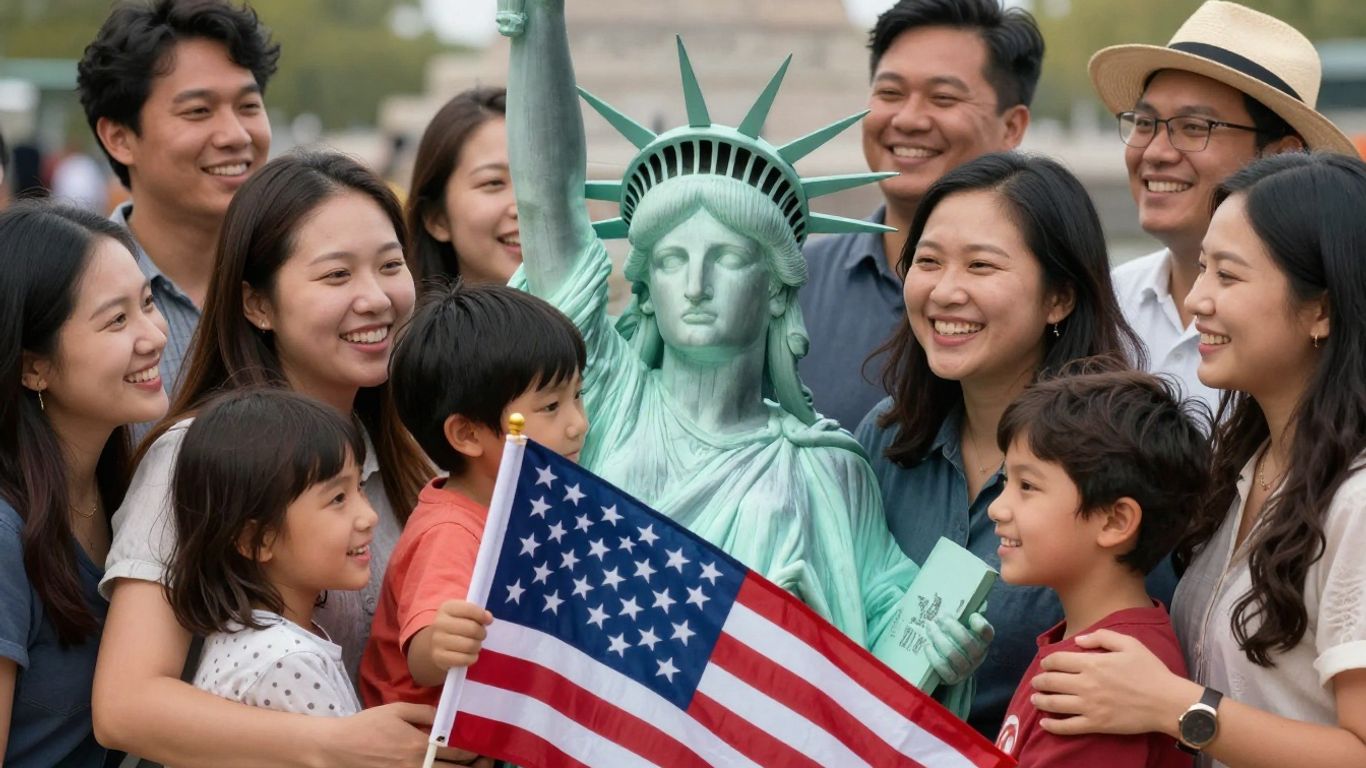
When you’re looking to bring family members to the U.S. through the reunification process, it’s super important to know that not all relationships are treated the same way by immigration. The U.S. government divides family members into two main groups: ‘immediate relatives’ and ‘preference categories.’ This distinction makes a big difference in how long your loved one might have to wait to get their visa.
Visa Availability for Immediate Relatives
So, who counts as an ‘immediate relative’? These are the folks who have the fastest track. They don’t have to wait for a visa number to become available because there’s no limit on how many visas are issued to them each year. This is a pretty sweet deal!
- Spouses of U.S. citizens
- Unmarried children (under 21) of U.S. citizens
- Parents of U.S. citizens (but the U.S. citizen must be at least 21 years old to sponsor them)
If your family member is an immediate relative and is already in the U.S., they might be able to apply to adjust their status to a green card holder at the same time you file their initial petition. That’s a huge plus!
Preference Categories for Other Family Members
Now, if your family member doesn’t fall into the immediate relative group, they’ll likely be in one of the preference categories. These categories have annual limits on the number of visas issued, which means there can be a waiting list. The wait time really depends on which preference category they fall into and how many people are ahead of them.
Here’s a quick rundown of the preference categories:
- First Preference: Unmarried adult sons and daughters (21 or older) of U.S. citizens.
- Second Preference (2A): Spouses and unmarried children (under 21) of lawful permanent residents (green card holders).
- Second Preference (2B): Unmarried adult sons and daughters (21 or older) of lawful permanent residents.
- Third Preference: Married sons and daughters (any age) of U.S. citizens.
- Fourth Preference: Brothers and sisters of U.S. citizens (the U.S. citizen must be at least 21 years old).
Priority Dates and Visa Bulletin Explained
How do you know where you stand in line for those preference categories? That’s where the ‘priority date’ and the ‘Visa Bulletin’ come in. Your priority date is basically the date USCIS received your initial petition (Form I-130). Think of it as your place in line.
The Visa Bulletin, published monthly by the U.S. Department of State, lists which priority dates are currently being processed for each preference category. If your priority date is ‘current’ on the Visa Bulletin, it means a visa number is available for your relative, and they can move forward with the next steps in the application process, like consular processing or adjusting their status if they are in the U.S.
It’s a bit like waiting for a table at a really popular restaurant; you get a number, and you wait until your number is called. Checking the Visa Bulletin regularly is key to understanding when your family member might be able to proceed. The wait can sometimes be quite long, so patience is definitely a virtue here.
Special Circumstances and Parole Processes

Sometimes, family reunification isn’t a straightforward path through the standard visa categories. Life happens, and situations change, leading to the need for alternative solutions. That’s where special circumstances and parole processes come into play. These can offer a way for certain family members to come to the U.S. while their immigrant visa case is pending, especially if there are delays or unique situations.
Family Reunification Parole Programs
These programs are designed for specific groups of people who have an approved Form I-130 petition but are facing long waits for their visa to become available. Think of it as a way to get a head start on being together in the U.S. The U.S. government has established these parole processes for nationals of certain countries, allowing them to come to the U.S. on a case-by-case basis. It’s not a guarantee, but it’s an option.
- Who gets invited? Typically, U.S. citizens or lawful permanent residents who have an approved I-130 petition for a relative in one of the designated countries receive an invitation to start this process. The invitation is key; you can’t just apply for it.
- What’s the process like? After receiving an invitation, the U.S.-based relative files a Form I-134A, Declaration of Financial Support, for the family member abroad. This shows the government that the family member won’t become a public charge.
- What happens next? If the I-134A is approved, the beneficiary might get advance travel authorization. They can then travel to the U.S. and, upon arrival, be considered for parole. If granted parole, they can stay in the U.S. while waiting for their immigrant visa to be processed and can even apply for work authorization.
Eligibility for Parole Consideration
So, who actually qualifies for these parole programs? It’s not for everyone, and it’s quite specific.
- Must have an approved I-130: This is non-negotiable. You need to have already filed and had a Form I-130, Petition for Alien Relative, approved for the person you want to bring over.
- Invitation is required: As mentioned, the U.S. petitioner must receive a specific invitation from USCIS to initiate the parole process. Without this invitation, the process can’t begin.
- Country-specific: These programs are usually limited to nationals of certain countries. For example, programs have been announced for individuals from countries like Colombia, Cuba, Ecuador, El Salvador, Guatemala, Haiti, and Honduras.
- Outside the U.S.: The beneficiary must be outside the United States when the process is initiated.
It’s important to understand that parole is a discretionary grant. It’s not an entitlement, and USCIS reviews each case individually. Factors like national security and public safety are always considered, and if there are concerns, parole can be denied.
Impact of Marital Status Changes
What if things change after the I-130 is approved? For instance, what if the principal beneficiary gets married or has a child? This can sometimes create new possibilities. If the principal beneficiary marries or has a child after their Form I-130 is approved, their new spouse or child might be eligible to be included as an "add-on derivative beneficiary." This means they could potentially be eligible for parole through the same process, provided they meet all the other requirements. It’s a way to keep the immediate family unit together, even if the family structure changed after the initial petition was filed. However, this inclusion is not automatic and depends on specific circumstances and program rules.
Preparing for Your Medical Examination
So, you’ve made it through a big chunk of the family reunification process. That’s great! Now comes a step that might feel a little daunting, but it’s really just about checking on your health: the medical exam. This is a standard part of the process, and it’s usually done by a doctor approved by the U.S. government in your home country.
Scheduling Your Medical Exam
First things first, you need to find an approved doctor, often called a "panel physician." The best way to do this is usually by checking the website for the U.S. Embassy or Consulate in your country. They’ll have a list of doctors who are authorized to do these exams. Once you find a name, give them a call. When you schedule your appointment, make sure to tell them you’re there for a USCIS family reunification parole process medical exam. This helps them know exactly what kind of exam you need.
Required Documents for the Exam
Don’t show up empty-handed! There’s a list of things you’ll need to bring. It’s a good idea to have these ready well before your appointment.
- Your valid passport: This is a must-have. Make sure it’s not expired.
- Your A-Number: This is your unique USCIS identification number. It’s usually on any official notices you’ve received.
- The "CONFIRM notice" from USCIS: This is the notice that confirms your case is moving forward.
- Vaccination records: If you have them, bring your vaccination card or any records showing your immunizations.
- Medical history: Any past medical records or information about current conditions, including prescriptions, can be helpful.
- A recent passport-sized photo: Usually, they want a color photo taken on a white background.
- Identification card: If you have a national ID, bring that too.
It’s important to bring all the correct documents. Missing even one item could mean you have to reschedule your appointment, which nobody wants! Double-check the list provided by the U.S. Embassy or the panel physician’s office before you go.
Understanding the Exam Process
What actually happens during the exam? It’s pretty straightforward. The doctor will likely review your medical history, give you a physical check-up, and might do some tests. This often includes screening for things like tuberculosis and a general mental health assessment. They’ll also check if you need any vaccinations or if your existing ones are up to date. The goal is to make sure you’re healthy enough to travel and won’t be a public health risk. It’s not a pass or fail test in the way you might think; it’s more about documenting your health status.
Seeking Professional Guidance
Look, bringing family to the U.S. through the visa reunification process is a big deal. It’s not exactly a walk in the park, and honestly, it can get pretty confusing fast. You’re dealing with government forms, specific rules, and deadlines. It’s really important to get things right the first time.
The Importance of Legal Counsel
Sometimes, you just need an expert. An immigration attorney can be a lifesaver here. They know the ins and outs of the system, which can save you a lot of headaches and potential mistakes. They can help you figure out the best way forward for your specific situation, which is super important because every family’s case is a little different.
Here’s what a good lawyer can do for you:
- Review your eligibility and the relative’s eligibility.
- Help you fill out all the forms correctly, like the I-130 petition.
- Advise on what kind of proof you need to show your relationship is real.
- Keep you updated on any changes in immigration law that might affect your case.
- Communicate with USCIS and the National Visa Center on your behalf.
Trying to do this all by yourself can be overwhelming. You might miss a small detail that could cause delays or even lead to your petition being denied. Having someone in your corner who understands the process can make a huge difference.
Avoiding Immigration Scams
This is a big one. Unfortunately, there are people out there who prey on families trying to reunite. They might promise quick results or ask for money upfront for services they can’t deliver. Always make sure anyone helping you is authorized to do so. This means they should be a licensed attorney or an accredited representative working with a recognized organization. You can check credentials to be safe. Don’t let anyone take advantage of your situation.
Customizing Your Reunification Strategy
Think of your family’s reunification like building something. You need a plan, and that plan needs to fit your unique circumstances. Maybe you have a complicated family structure, or perhaps your relative has a past immigration issue. An immigration lawyer can help tailor the application process to your specific needs. They can also help you prepare for potential challenges, like gathering extra documentation or understanding if your relative might need a waiver. For example, if you’re looking into supporting someone, you might need to file Form I-134A, Online Request to be a Supporter, and a lawyer can guide you through that.
Bringing It All Together
So, bringing your family to the U.S. through the reunification process can feel like a big puzzle. There are forms to fill out, rules to follow, and sometimes, it just feels overwhelming. But remember, this whole system is designed to help families stay together. It takes patience and attention to detail, and honestly, sometimes a little help from someone who knows the ropes can make all the difference. Don’t get discouraged by the paperwork; focus on the goal of having your loved ones by your side. With the right approach and a clear plan, you can make this dream a reality.
Frequently Asked Questions
Who can bring their family to the U.S. through family reunification?
U.S. citizens and green card holders (people who have permanent residency) can sponsor their family members to come to the U.S. This process helps families stay together and allows loved ones to build a life in America.
What is the first step to bring my family to the U.S.?
The very first step is to file Form I-130, which is called a Petition for Alien Relative. This form tells the U.S. government about your relationship with the person you want to bring over. It’s the official start of the family reunification process.
What’s the difference between ‘immediate relatives’ and other family members?
Immediate relatives, like spouses, unmarried children under 21, and parents of U.S. citizens over 21, have a smoother process because visas are always available for them. Other family members might have to wait longer because there are yearly limits on how many visas are given out in those categories.
What is a ‘priority date’?
A priority date is the date you file Form I-130. It’s like your place in line for a visa. For family members who aren’t immediate relatives, you’ll need to wait until your priority date is current according to the Visa Bulletin, which is a government publication showing visa availability.
What are Family Reunification Parole Programs?
These programs are special ways for certain family members from specific countries to come to the U.S. on parole while they wait for their immigrant visa to become available. It’s usually by invitation only after a Form I-130 has been approved.
Why is it important to get legal help for family reunification?
Immigration rules can be very confusing and tricky. A lawyer who specializes in immigration can help make sure you fill out all the forms correctly, understand the requirements, and avoid common mistakes or scams. This can make the whole process go more smoothly and increase your chances of success.